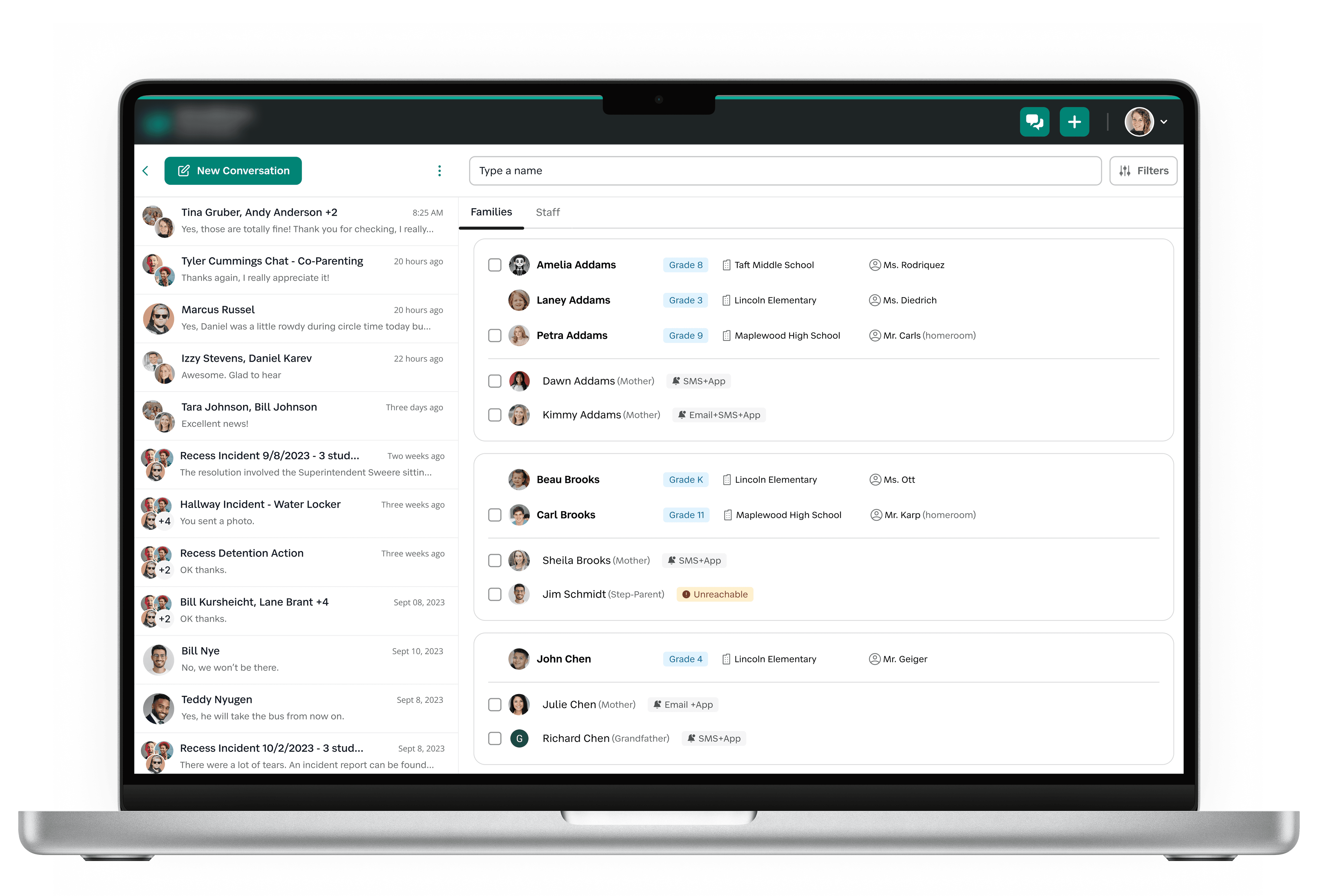
PRIVACY & DATA RESPONSIBILITY
Throughout this project, I prioritized student data privacy and responsible AI use. All ideation and prototyping assumed that data would be de-identified before ingestion, and that systems would allow datasets to be accurately re-associated in a secure way for actionable insights. Emphasizing privacy from the start reinforced the feasibility and trustworthiness of AI-generated insights, which is critical in K–12 environments where adoption is sensitive to data security concerns.
PROBLEM FRAMING
Educators are drowning in data but often don’t know where to start. Key signals, such as students at risk, curriculum gaps, or the impact of interventions can go unnoticed until it’s too late. Current tools prioritize communication or reporting rather than insight generation, meaning decisions are often reactive and inconsistent across classrooms and schools.
OPPORTUNITY
AI can identify patterns, highlight anomalies, and predict potential challenges before they become critical. This opens a path for schools to act on insights rather than raw data, creating a proactive approach to student success that hasn’t yet been widely adopted in K–12 education.
PROTOTYPING & SOLUTIONING
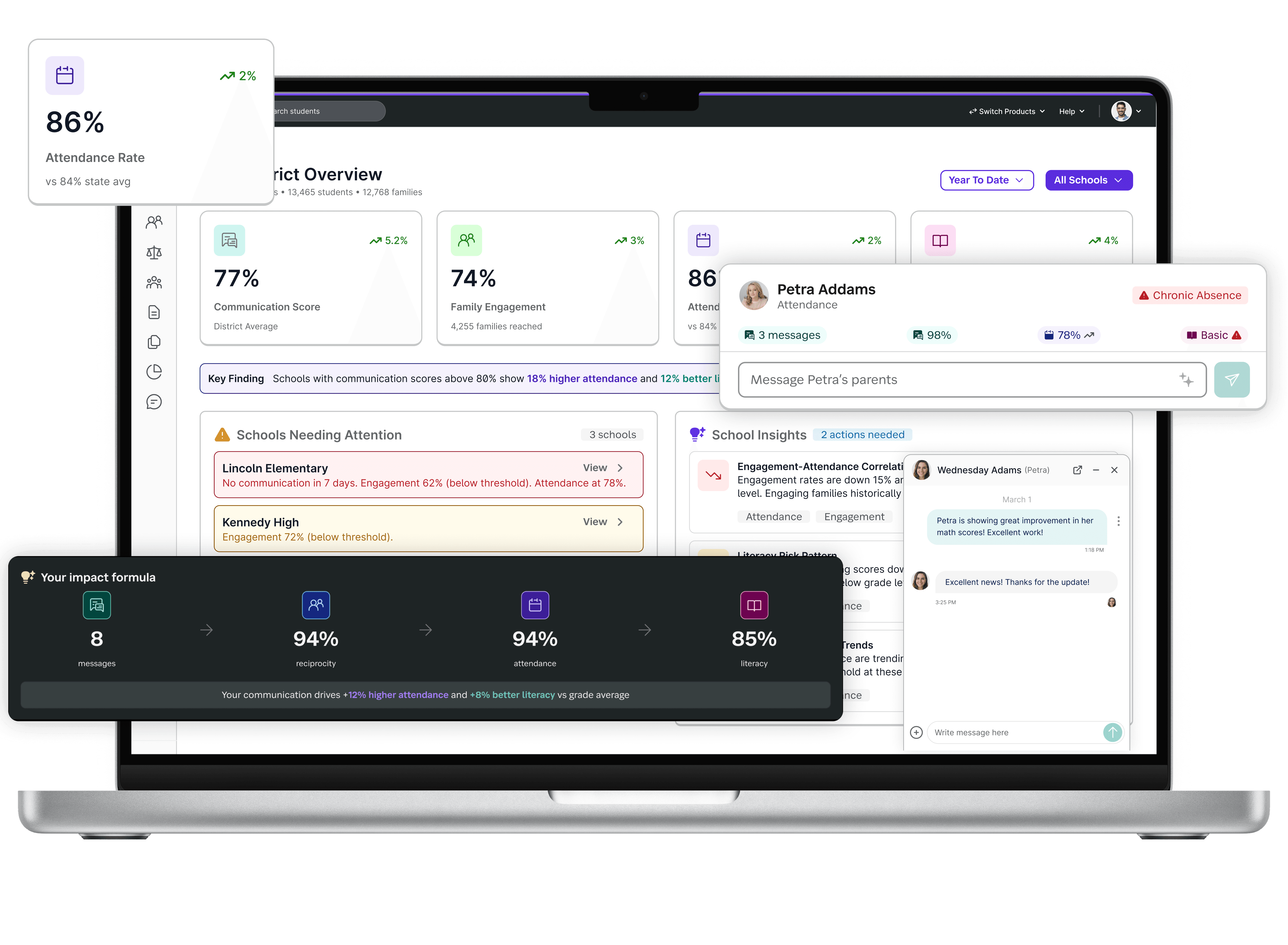
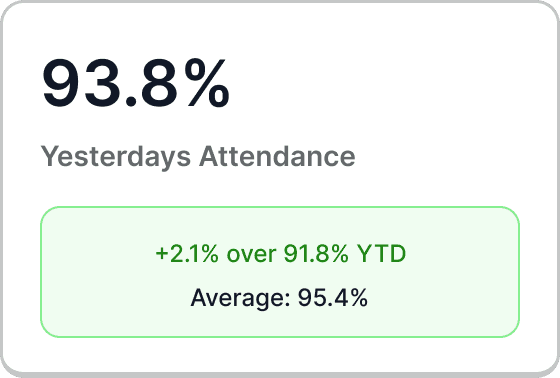
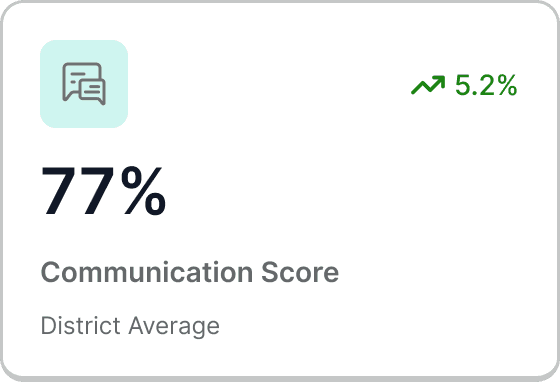
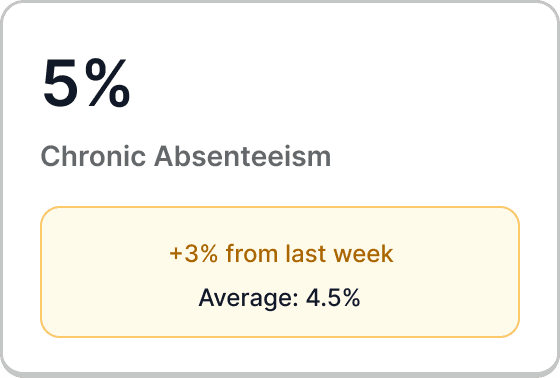
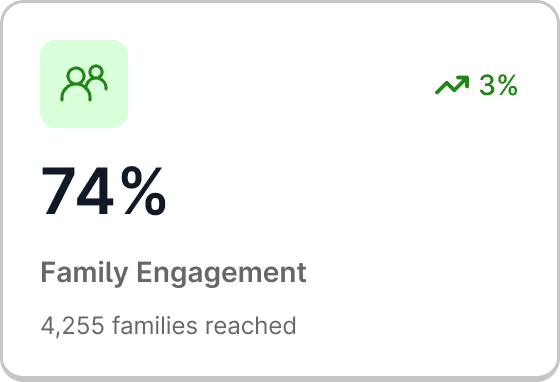
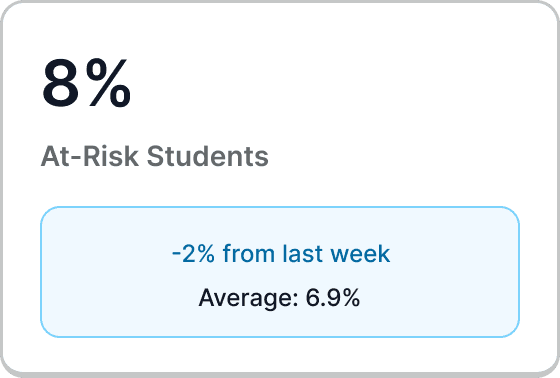
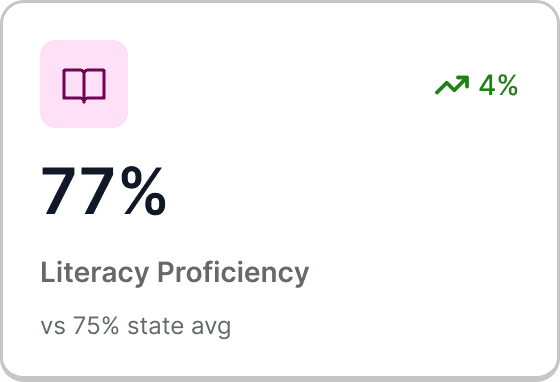
This project explored how AI could generate actionable insights from K–12 student data, pioneering a new approach in education. I began by crafting targeted prompts in ChatGPT to produce meaningful insights based on key student performance areas, testing multiple iterations to find what resonated with educators. These AI-generated insights were then translated into interactive prototypes, giving teammates and stakeholders a tangible sense of how the system could function.
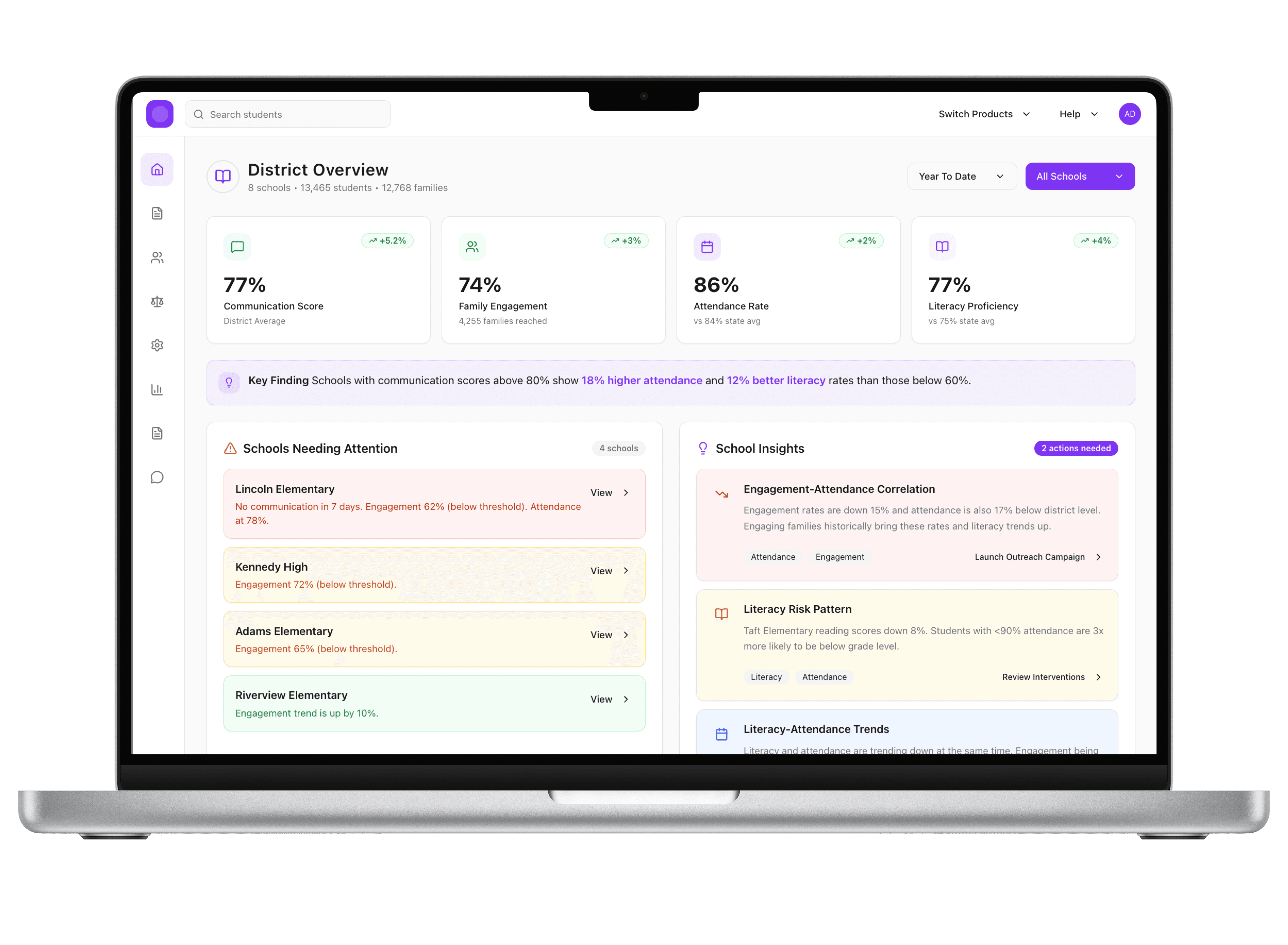
LITERACY INSIGHTS
Using a product brief on literacy insights, I replicated this approach, refining the AI prompts and prototypes to focus on curriculum and student learning trends. From there, I took these prototypes and developed a polished, high-fidelity version suitable for board and leadership presentations. This version highlighted how AI can surface trends, flag at-risk students, and suggest actionable interventions, all in an intuitive, digestible format.
TAKING IT A STEP FURTHER
Throughout the process, I led iteration cycles with teammates, morphing the prototypes based on feedback and real-world feasibility, ensuring that the final concept was not only innovative but also implementable in a slow-adopting K–12 environment.
AND EVEN FURTHER
Next, I translated the refined clickable prototypes into high-fidelity mockups that adhered to our internal design system, creating a polished, cohesive visual language that aligned with the organization’s standards. These mockups were designed to excite leadership and sales teams, demonstrating not only the potential of AI-driven insights but also a tangible, visually compelling vision for the future of K–12 analytics.
LEARNINGS & IMPACT
Exploring AI-driven insights for K–12 revealed both the potential and the challenges of introducing emerging technology in a traditionally slow-to-adopt space. By experimenting with AI prompts, prototyping concepts, and translating them into polished designs, I learned how to turn novel ideas into tangible, strategic solutions that resonate with educators and leadership alike. This project reinforced the importance of iterative exploration, thoughtful design alignment, and clear communication to inspire confidence in untested, innovative approaches.
AI as a strategic partner
AI can accelerate insight generation and early prototyping, helping teams explore ideas quickly while maintaining alignment with product goals.
From Prototype to Polished Vision
Refining AI-generated prototypes into high-fidelity, design system-aligned mockups turns exploratory concepts into compelling, stakeholder-ready experiences.
Driving Adoption in Slow-Moving Contexts
Balancing innovation with feasibility and educator workflows is critical when introducing cutting-edge solutions in K–12 environments.