PROBLEMS TO SOLVE
Scale & Enterprise Access
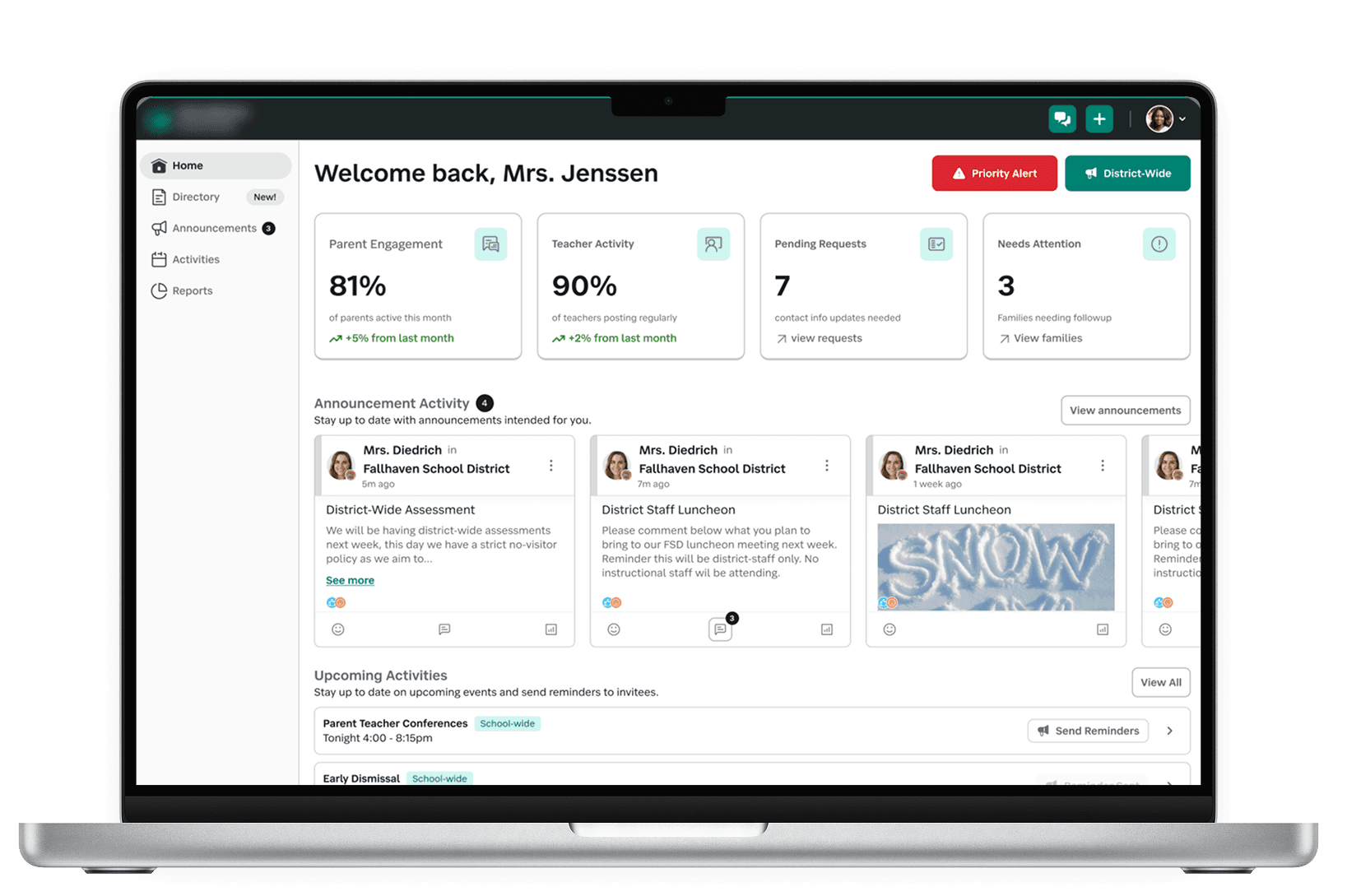
Before: Messages were limited to classrooms “owned” by each user, making district-wide outreach impossible.
After: Users can now see every student in the district, organized alphabetically by student/family group, enabling faster, more reliable communication.
Messaging Workflow & Compliance
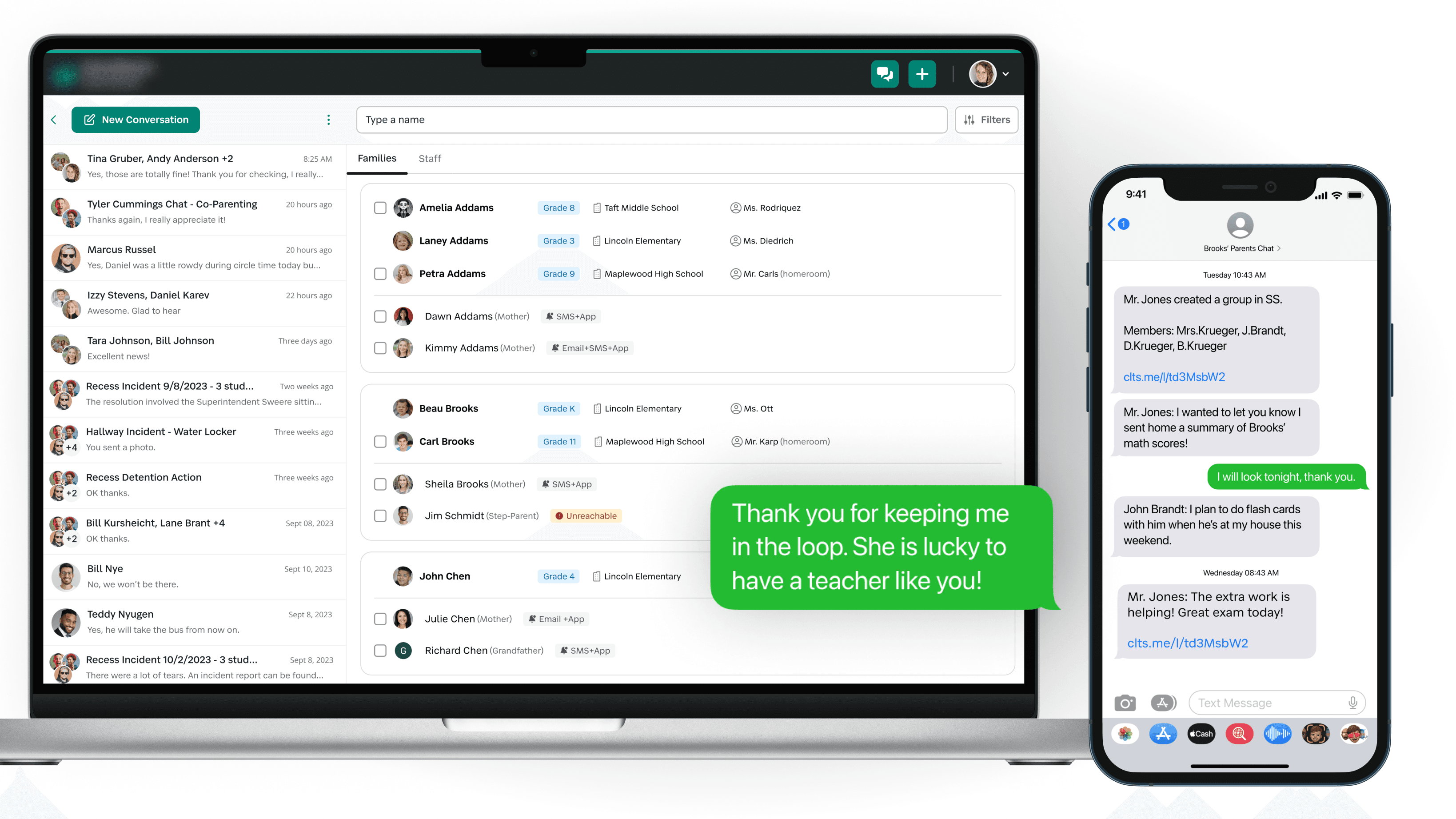
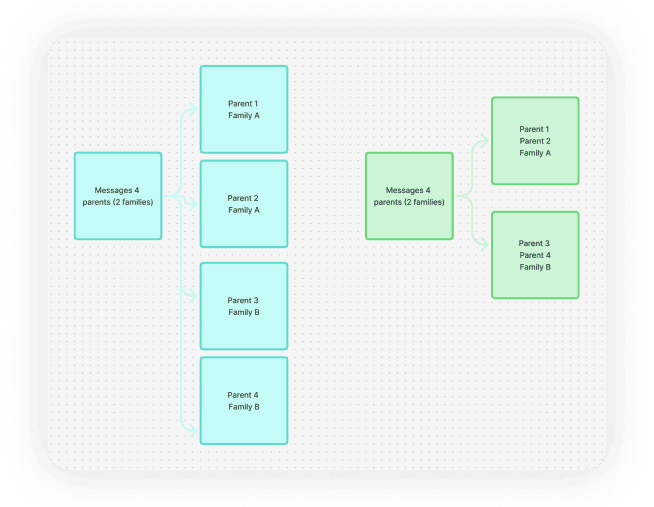
Before: Broadcasting messages involved sending many individual messages (high cost, complex FERPA compliance).
After: Group messaging with secure links allows images and content to reach multiple recipients while staying compliant and reducing costs.
Click a card to dive deeper into the design solution, workflow diagrams, and user research for each problem.
Scale & Enterprise Access
THE CHALLENGE
Administrators couldn’t see all students. They were stuck in classroom-level views due to the “context switcher” as the team had labeled it. In the messages area we know we had to scrap the global context switcher and “unify” the conversation lists, provide orientation for district - level users and allow them to filter on those attributes.
SOLUTION (QUICK & SCRAPPY IMPROVEMENTS
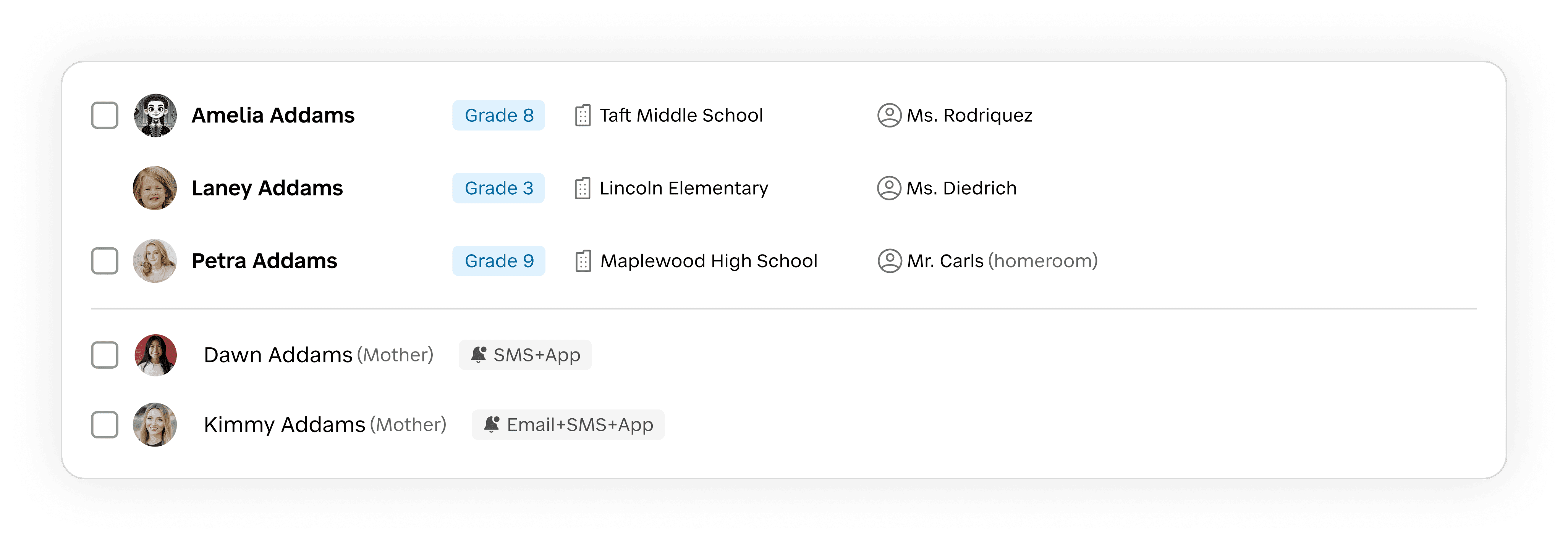
Unified conversation lists
This unlocked the student-centric mental model that matches our core user’s daily JTBD constructs.
Created family cards
This family approach made conversation creation and tracking/logging much easier to find for all users, especially administrators.
Enabled filtering
Filtering would enable districts with large lists of families to easily narrow down who needed to be reached out to.
Messaging Workflow & Compliance
THE CHALLENGE
Our original messaging flow turned broadcasts into large volumes of 1:1 messages. This increased SMS/MMS costs, complicated FERPA compliance, and made media sharing inefficient (images sent individually per recipient). Districts needed a safer, more scalable group messaging model that reduced cost, protected student data, and simplified how messages and media were delivered.
WHAT WE KNEW
TECHNICAL & REGULATORY CONSTRAINTS
WHAT WE SET OUT TO LEARN
Message model trade offs
Mapped how legacy SMS/MMS broadcasts generated messages and costs vs. how grouped conversations and link-protected media would behave in the new platform.
Media Delivery vs. Privacy
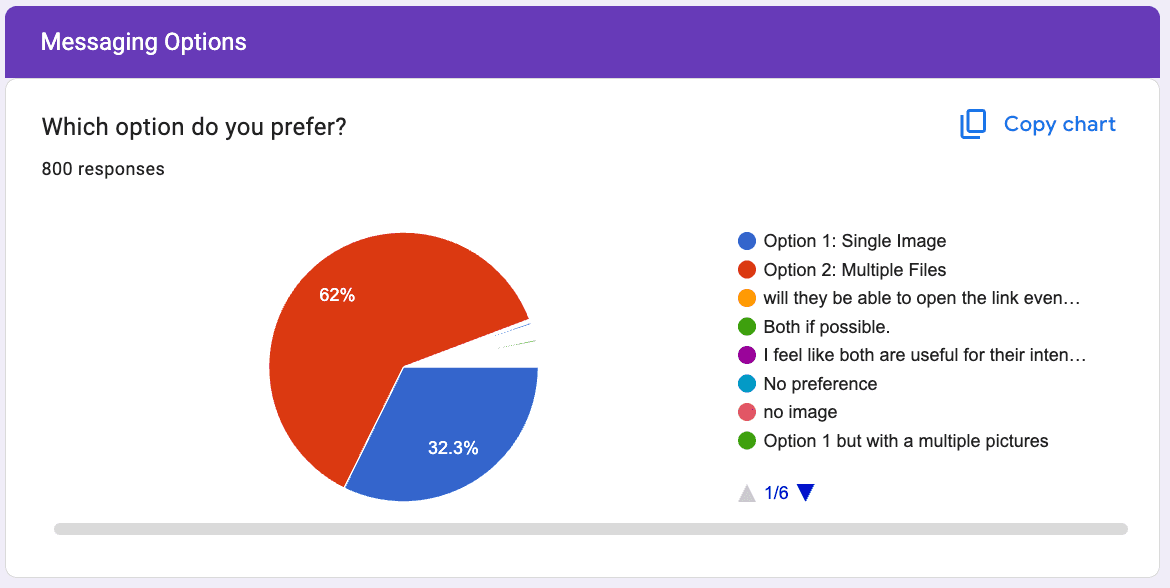
Evaluated direct MMS image delivery against authenticated link-based media to balance usability with FERPA and minor data protection requirements.
Enabled filtering
Filtering would enable districts with large lists of families to easily narrow down who needed to be reached out to.
USER RESEARCH
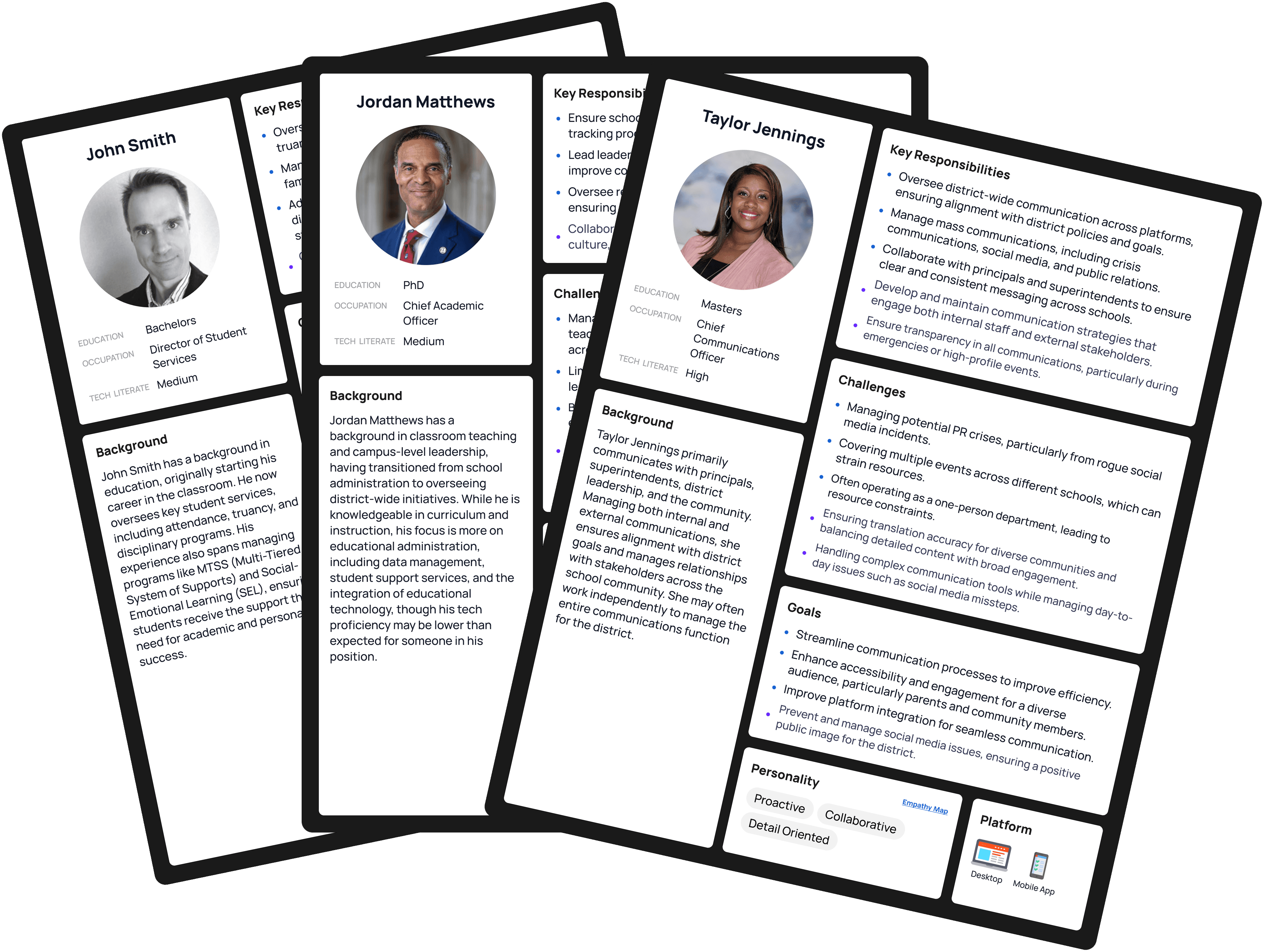
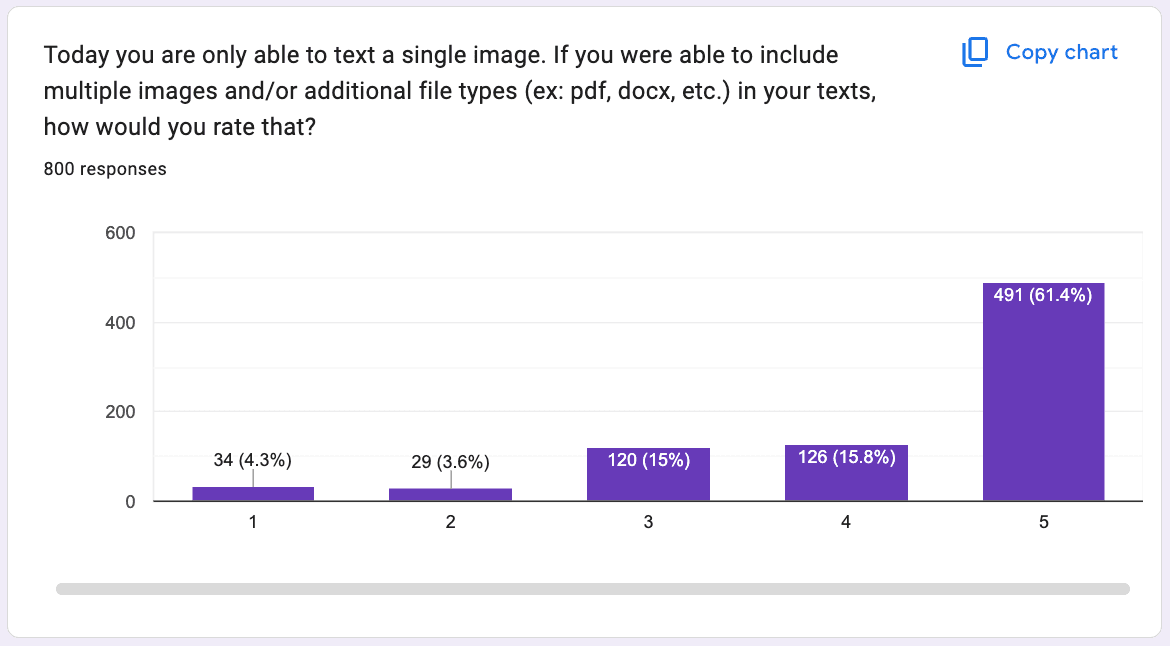
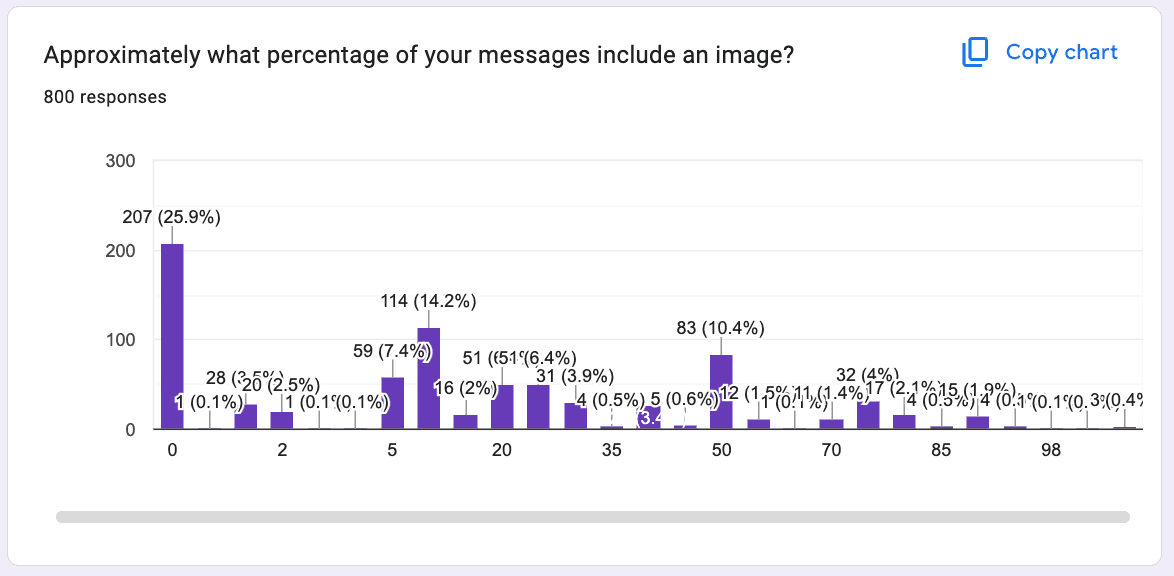
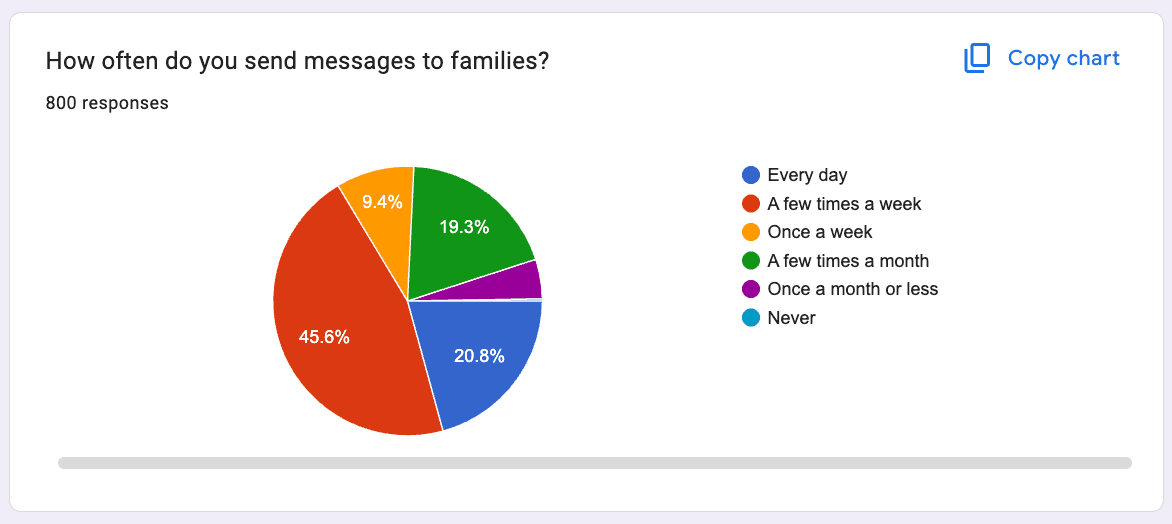
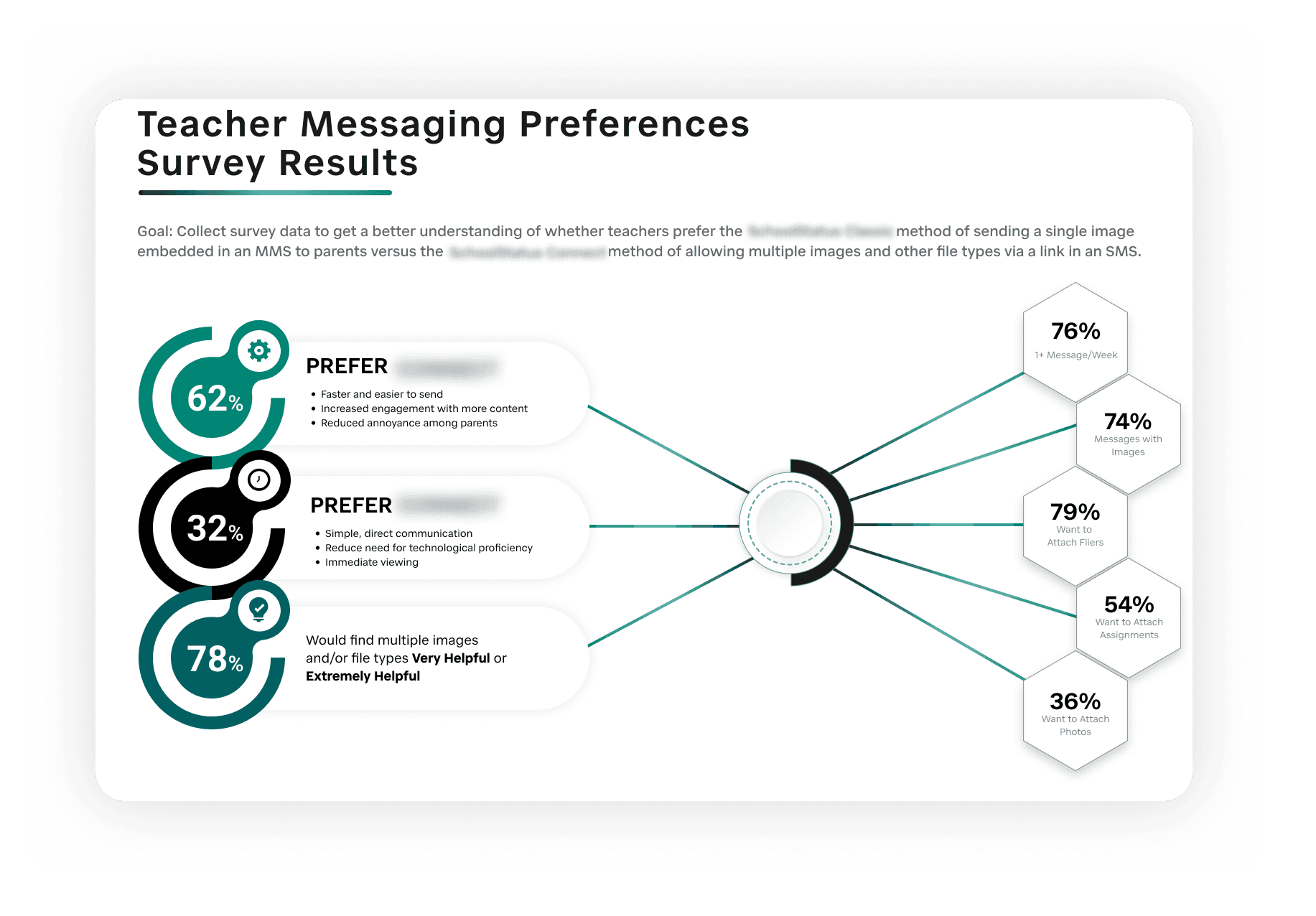
Grounding Workflow Changes in Real Communication Behavior Because messaging changes directly affect delivery, cost, and compliance, we validated real-world usage before redesigning workflows. Survey and interview data helped us understand attachment types, sending habits, and must-keep legacy behaviors before defining the new model.
RESEARCH SYNTHESIS & STAKEHOLDER ALIGNMENT
We consolidated research findings into a visual summary to support cross-functional decision-making. This helped stakeholders quickly understand user behavior, tradeoffs, and risk areas, accelerating agreement on the new messaging and media model.
CREDENTIAL MAPPING & DELIVERY SAFEGUARD
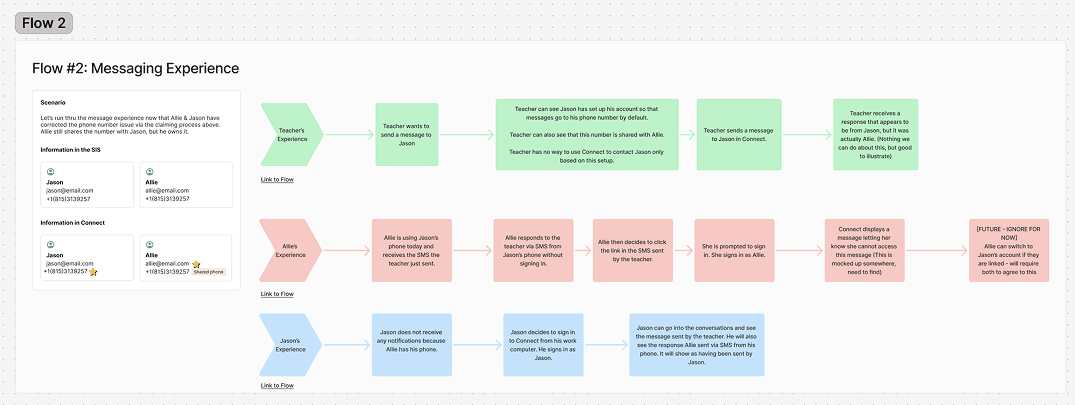
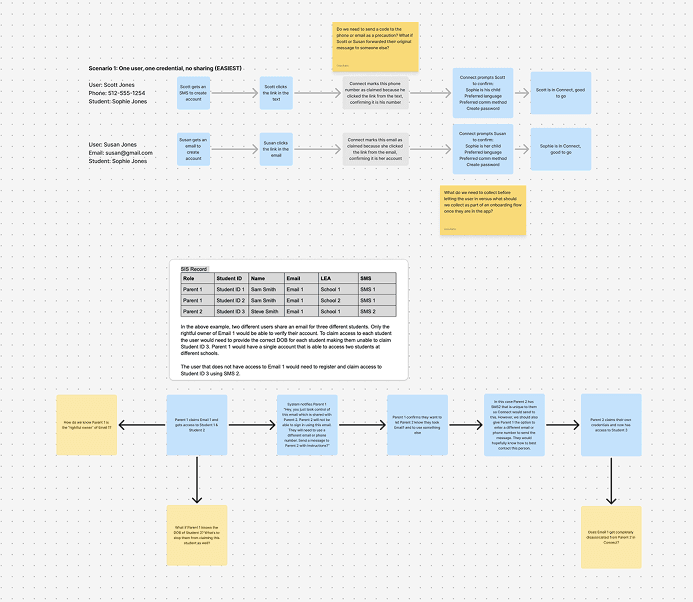
Because messaging access is tied to student-guardian credentials, inconsistent district data created delivery risk. We diagrammed and tested edge-case credential mappings to ensure only authorized recipients could receive messages.
PRE-LAUNCH SAFEGUARD TESTING
An internal committee modeled real district setups and stress-tested messaging flows end-to-end. We focused on uncovering edge cases that could expose student data and closed those gaps prior to release.
DIRECT IMPACT
Cost savings, FERPA compliance and the key to migration were reached with these improvements.
SMS Link v MMS
Saved $300k+ by sending texts instead of multimedia messages which cost 3x as much without negatively impacting UX.
Migration Unlocked
This feature, along with calling were two blockers to opening migration. Doing so unlocked over $1M in revenue.
Account & Notification Management
THE CHALLENGE
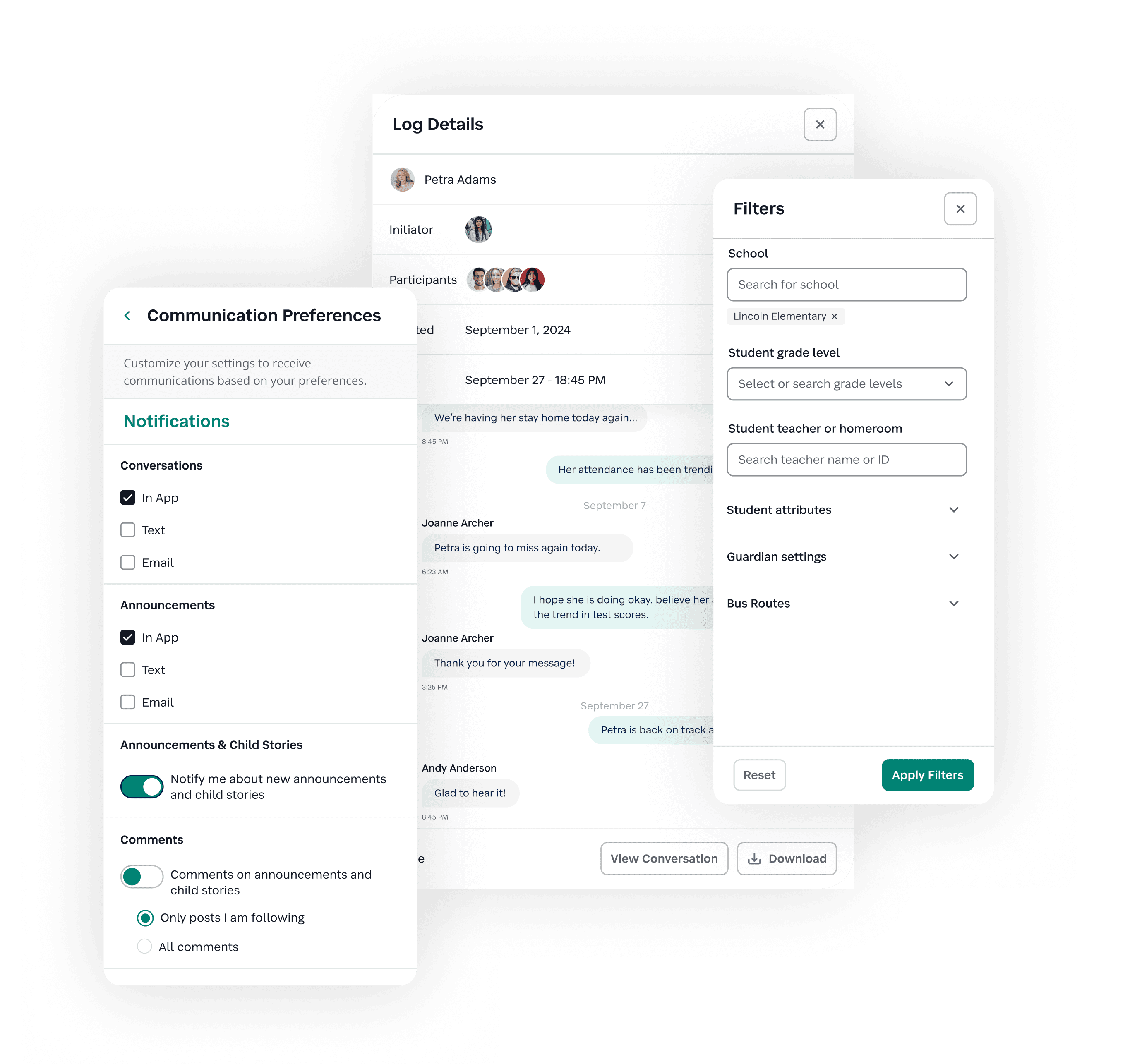
Notification behavior and account settings were inconsistent across conversations, announcements, and message types. Users couldn’t reliably predict what would trigger alerts or how preferences carried across channels, leading to missed messages and support friction. At district scale, this lack of clarity reduced trust in the messaging system.
DESIGN RESPONSE
We separated notification logic by message type and clarified preference controls at the account level. Conversations and announcements received distinct notification settings, with clearer triggers and labels so users could understand exactly what they would receive and why. The updated model aligned system behavior with user expectations and reduced missed or misinterpreted alerts.
LEARNINGS & IMPACT
Redesigning the district-wide messaging experience addressed long-standing friction for administrators and teachers, improving both efficiency and clarity. Early feedback showed users could find contacts faster and communicate with confidence, fostering trust at the district level. This project reinforced the value of context-first IA and rapid prototyping in complex workflows, and sets the stage for future enhancements that continue to simplify communication for all stakeholders.
Student-first concept
The first step in untying the context-first architecture.
Enabled Enterprise
Unlocked a new revenue area, making enterprise sales possible.